
Your basket is empty
Already have an account? Log in to check out faster.
Your basket
Your basket is empty
Already have an account? Log in to check out faster.

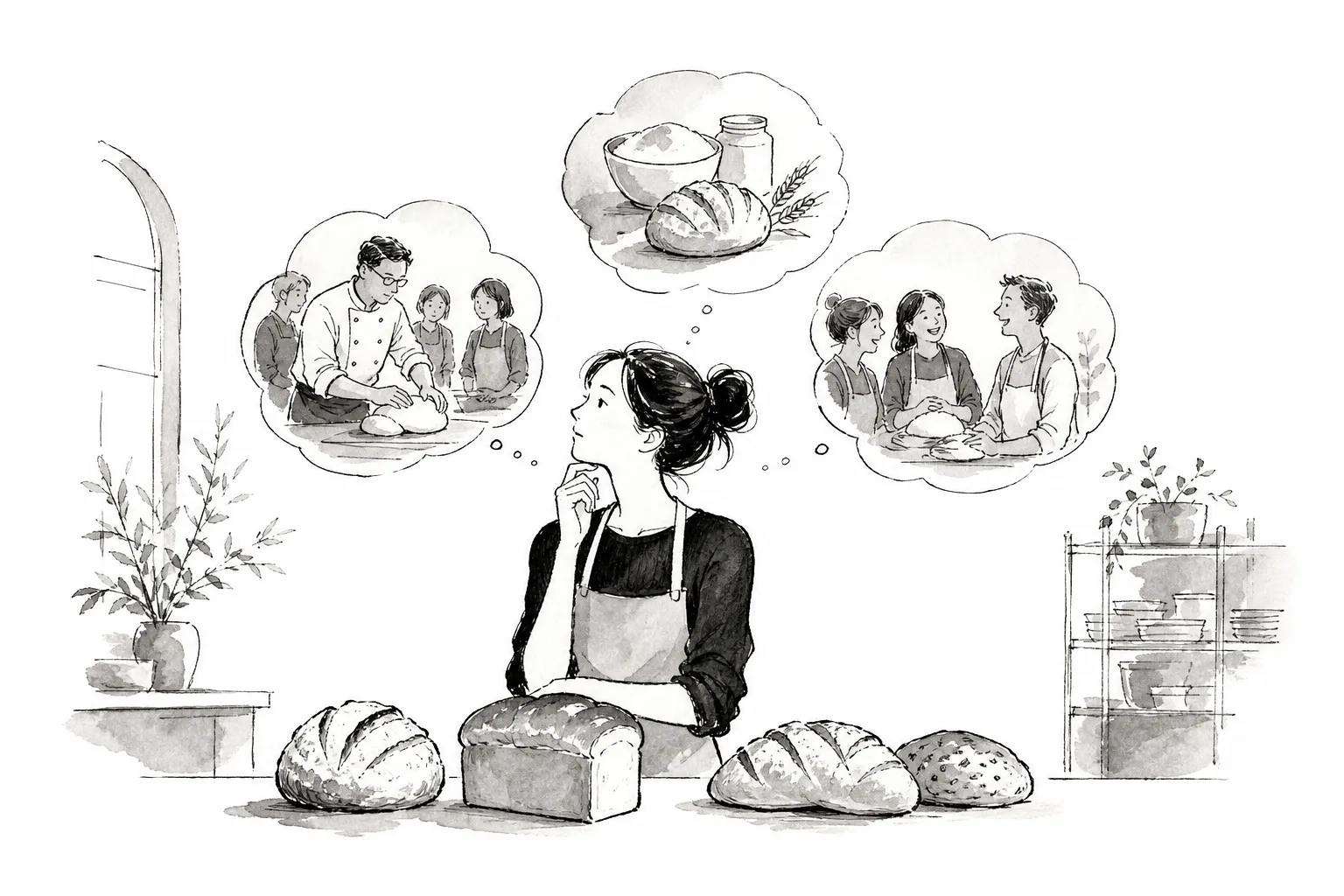
Choosing a bread baking class in Singapore is harder than it looks. The options here are more varied than most people expect, one-day hobby workshops, WSQ-accredited multi-session courses, large commercial cooking studios, and small artisan schools like Bespoke Bread all sit side by side in the market. They are not the same thing, and they are not interchangeable. Many people end up picking one by price, by proximity, or by how well-lit the Instagram photos look. That approach is how you end up making one loaf, going home with a recipe printout, and never touching dough again.
The right bread baking class in Singapore depends entirely on what you are trying to walk away with. This guide gives you a clear, criteria-driven way to evaluate any bread baking course before you spend a dollar, so you leave with real skills rather than a vague memory of kneading something once.
There is a significant difference between a demonstration-style class and a genuinely hands-on one. In a demo class, you watch the instructor bake. In a hands-on class, you touch dough from the very beginning. Many participants do not think to ask which format they are signing up for before booking.
Bread is a tactile craft. Watching someone shape a loaf does not teach your hands to do it. You need to feel when dough is under-proofed, over-hydrated, or finally ready to score. That knowledge lives in your fingers, not in your notes.
The term "hands-on" appears in the marketing copy of many bread workshops in Singapore. What it often means in practice is a classroom theory segment followed by a brief practical component near the end of the session. Ask specifically: will you be mixing, shaping, and scoring your own dough throughout the entire class?
A compressed, immersive one-day workshop builds momentum that spread-out sessions can struggle to replicate. You stay focused, get immediate feedback on your dough, and leave the same day with a finished loaf you made yourself. That tangible result matters more than people realise. For many beginners, the continuity of a single full day, staying in the dough-making mindset from start to finish, builds confidence that a series of weekly two-hour sessions simply cannot.
Multi-week accredited courses serve a different purpose. WSQ-format programmes are designed for professional development and certification pathways, and they work well for that goal. But for a hobbyist who wants to bake good bread at home, the structure can feel abstract and drawn-out. Both formats have genuine merit, the question is which outcome you are actually pursuing. If you want accreditation and deeper technical study, a multi-session WSQ course is the right fit. If you want to come home on a Saturday evening and bake a decent loaf, an immersive one-day class is likely the better choice.
Singapore's bread workshops broadly split into two tracks. Sourdough-focused classes cover starter care, fermentation, open crumb structure, and scoring. Enriched bread classes cover Japanese milk bread, brioche, panettone, and pizza dough, with attention to shaping, enrichment ratios, and managing dough behaviour in our humid climate. Neither track is better than the other.
Picking the wrong one, however, wastes both your time and money. Look past the recipe list when evaluating a class, the recipes are the output. What matters is what skills the class is built around: fermentation science, reading dough by feel, temperature control, or simple formula replication. A class built around real skills transfers to your home kitchen. A class built around replication does not.
Many class descriptions use "beginner-friendly" as a comfort phrase rather than a curriculum commitment. A genuinely good beginner class does not just simplify the process, it explains the reasoning behind each step so that you can troubleshoot independently at home when things go wrong, because they will.
A substantive beginner bread curriculum covers ingredient ratios and why they matter, common failure points and how to recognise them, and dough feedback that is taught rather than simply demonstrated. The take-home materials should go well beyond a single recipe card. Bespoke Bread, for example, provides every student with a detailed curriculum booklet to take home. That kind of investment in materials signals that the school cares about your learning outcome, not just your experience on the day.
Bread dough behaves differently depending on ambient temperature, humidity, and the individual baker's handling. In a large class, the instructor cannot observe each student's dough closely enough to correct technique in real time. Errors in shaping or timing get missed, and those errors become habits.
Some Singapore studios accommodate up to 20 students per session, a figure commonly seen in publicly listed class capacities. Bespoke Bread keeps classes small, with a cap of around 8 students, which is the kind of ratio that makes personalised instruction possible rather than general supervision. A beginner needs someone watching their specific dough, not the room's average dough.
As one example of how class size shapes credibility: when a school maintains a genuinely small cap, it tends to attract recognition from culinary professionals rather than lifestyle influencers. Bespoke Bread's programme has drawn endorsements from chefs and culinary judges, which reflects the standard of instruction rather than the size of the marketing budget.
Here is a question worth asking before you book: once you are home and your sourdough starter will not bubble, or your crust is coming out wrong, who do you contact? Many one-day workshops offer nothing beyond the session itself, no follow-up resources, no community, no way to ask questions once you are back in your own kitchen.
Access to an online baking community and a video tutorial library can transform a single class into an ongoing skill-building resource. Bespoke Bread offers students exactly this kind of post-class continuity. Students leave with freshly baked bread and their materials, and also with access to step-by-step video tutorials and a community that remains available long after the class is over. That continuity is what separates a one-time experience from a skill you actually develop.
One-day bread workshops in Singapore typically run from S$80 to S$200 or more per person, depending on group size, curriculum depth, and what is included. Multi-session accredited courses range from around S$195 to S$981 before subsidies are applied. Private tuition sits at S$350 to S$450 or higher.
Price is a signal, not the deciding factor. A S$98 class and a S$168 class are not offering the same experience. Before comparing numbers, confirm what is included: recipes, tools, aprons, take-home bread, and post-class support. A class that provides all materials and ongoing community access at S$168 may well represent better value than a stripped-back session at S$98 with nothing to take home.
Singapore Citizens aged 25 and above can use their SkillsFuture Credit to offset eligible course fees after enrolment, by submitting a claim through the MySkillsFuture portal using Singpass. Providers that typically offer WSQ-accredited bread courses include BELLS, Allspice Institute, ITE, Acetek, and ACI, with subsidy tiers reaching up to 50% for Singapore Citizens and PRs aged 21 and above, and up to 70% under the Mid-Career Enhanced Subsidy for those aged 40 and above.
SkillsFuture-eligible courses serve a specific purpose: accreditation and formal professional development. If your goal is to bake better bread at home in a warm, small-group setting with expert guidance, the artisan school model often delivers a richer learning experience than a subsidised WSQ programme designed for a different outcome entirely. When evaluating Bespoke Bread's class fees, weigh them against the full picture: the quality of instruction, the materials provided, and the post-class support included, rather than comparing the headline number alone against a stripped-back alternative.
The decision framework is straightforward once you are clear on your goal. Match what you want, home baking skill or professional certification, to the right format: a hands-on Singapore bread baking class at an artisan school, or a WSQ accredited course. Evaluate based on group size and curriculum depth rather than price alone. Treat post-class support as a non-negotiable rather than a nice-to-have.
The best bread baking class in Singapore is not necessarily the cheapest, the most convenient, or the one with the most photogenic studio. It is the one that teaches you to bake well, independently and consistently, in your own kitchen, long after the class is over.
You now have a clear framework for choosing well. If you are ready to get your hands properly in the dough, Bespoke Bread's small-group classes are a good place to start. Get in touch with the team to find the right session for you.
0 comments