

Your basket is empty
Already have an account? Log in to check out faster.
Your basket
Your basket is empty
Already have an account? Log in to check out faster.

What if the secret to that cloud-like Japanese bread isn't a fancy oven, but a simple stovetop roux that defies the laws of baking physics? We've all been there; you're dreaming of a pillowy loaf, but without the guidance of a milk bread class Singapore, the intense humidity often turns your dough into a sticky, over-proofed disaster. It's enough to make even the most patient baker feel a little crumb-y. You deserve a loaf that's as soft as your favorite pillow, not one that bakes up like a dense, dry brick.
The good news is that you don't have to knead through the frustration alone. We promise to help you master the legendary Tangzhong technique and learn exactly how to handle high-hydration dough in our tropical climate so you can finally rise to the occasion. We'll dive into the science of the "water roux," the tricks to managing heat, and how to achieve that signature shreddable texture that makes every slice a total treat. It's time to stop loafing around and get bready to rumble!
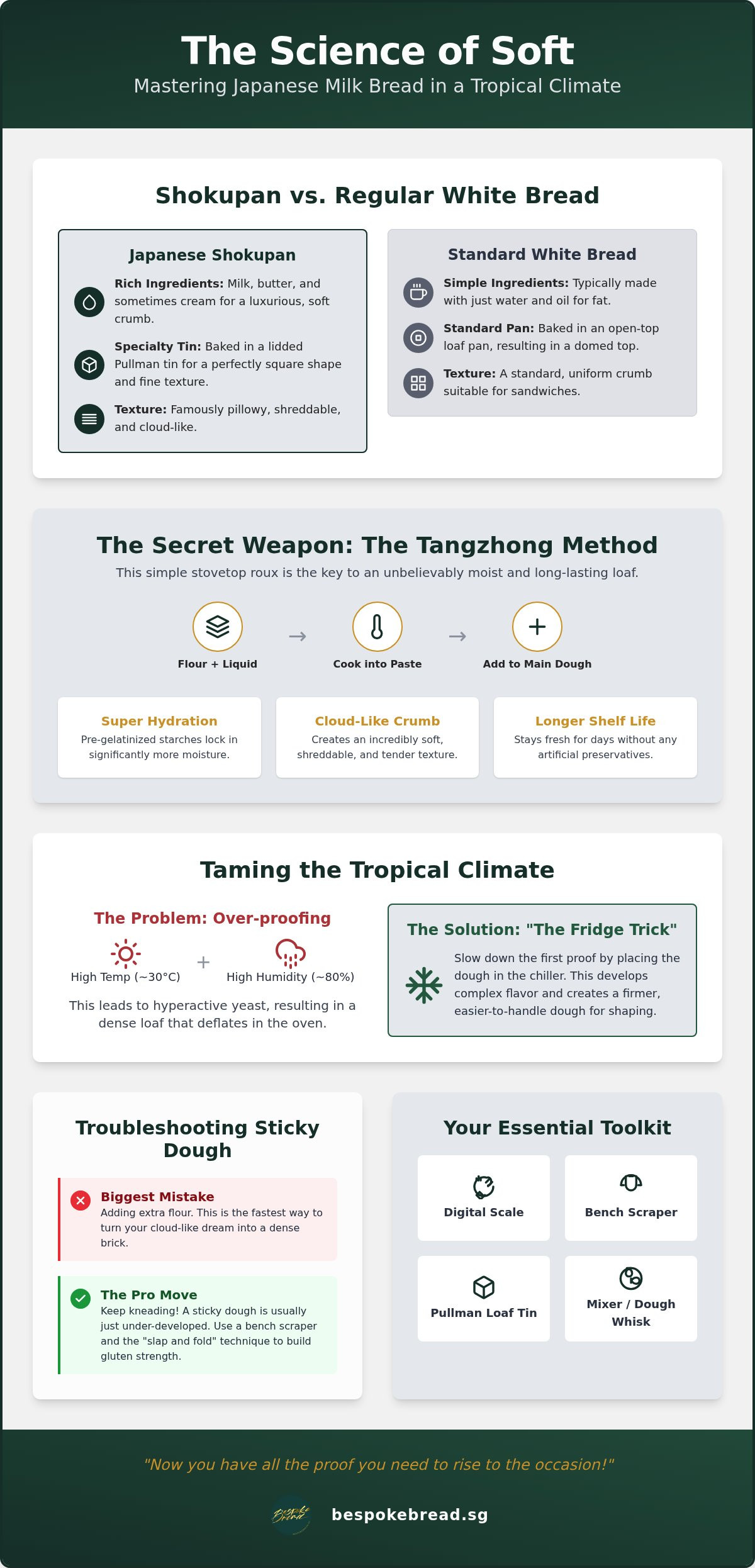
Ever wondered why a slice of Japanese milk bread feels like a warm hug for your tastebuds? Unlike the crusty, rustic European loaves that require a serious jaw workout, Shokupan is all about that "cloud-nine" experience. It's famous for a shreddable, pillowy texture that pulls apart in delicate, feathery layers. This isn't just luck; it's delicious chemistry! By loading the dough with higher fat and sugar content compared to lean artisan breads, we "shorten" the gluten strands. This creates a crumb so soft it practically melts. To reach this level of fluff, you'll need to master the windowpane test. This is the gold standard for gluten development. If you can stretch your dough thin enough to see light through it without it tearing, you're ready to bake. If it snaps, you've still got some work to do. Joining a milk bread class Singapore is the fastest way to get your hands on these techniques.
The real magic happens with the Tangzhong method. This involves cooking a small portion of flour and liquid into a thick paste before adding it to the main dough. This process pre-gelatinizes the starches, which allows the flour to absorb significantly more moisture than cold mixing ever could. This extra hydration stays locked in during the bake. It ensures your bread doesn't turn into a dry crouton by the next morning. Tangzhong is the key to a longer shelf life without preservatives.
Don't let the pale color fool you; this isn't your average supermarket loaf. While standard white bread often relies on simple water and oil, Shokupan goes "whole hog" with milk, butter, and sometimes even heavy cream. These rich ingredients provide that signature milky aroma and a luxurious mouthfeel you won't find in a basic sandwich loaf. We also use a Pullman tin, a lidded rectangular pan that traps the steam and forces the dough into a perfectly square shape. This creates a fine, uniform crumb that's ideal for everything from French toast to premium fruit sandwiches. It's a sophisticated step up for any home baker ready to rise to the challenge. For those who appreciate this level of Japanese culinary precision, exploring other authentic dining experiences like Leoka Teppanyaki can provide further inspiration for your own kitchen creations.
Baking bread is a rhythmic dance. The workflow follows a specific beat: Tangzhong prep, mixing, the first proof, shaping, and the final rise. Learning these rhythms in a milk bread class Singapore ensures you don't lose your cool when the dough gets clingy. Always use room temperature ingredients to start. Cold butter won't blend; it just sits there like a stubborn guest who won't leave the party. Because this dough is so hydrated, the "slap and fold" technique is vital. It builds gluten strength effectively without requiring a mountain of extra flour that would ruin the fluff.
To set yourself up for success at home, grab these essential tools:
Singapore's climate is basically a giant proofing box. With humidity often hitting 80% and kitchens hovering around 30°C, your yeast can get a little too excited. This often leads to over-proofing, which results in a loaf that deflates in the oven. To stay in control, use the "Fridge Trick." Popping your dough in the chiller for its first rise slows down the fermentation. This gives you a more complex flavor and a dough that's much firmer and friendlier to handle during shaping.
If your dough feels like a swamp, don't panic. The biggest mistake beginners make is adding extra flour. This turns your cloud-like dream into a dense, sad brick. Usually, a "sticky" dough is just an under-kneaded one that hasn't developed its structure yet. Use your bench scraper to keep the dough moving. If you want to see these techniques in action before flying solo, our Japanese bread class is the perfect place to get your hands dirty with expert guidance.
YouTube is fantastic for entertainment, but it can't tell you if your dough is crying for help. You can't reach through a glass screen to feel the tension or check the elasticity of a high-hydration dough. That's why a hands-on milk bread class Singapore is a total game-changer for your kitchen confidence. When you're in the kitchen with us, you get immediate, real-time feedback. If your dough is acting a bit "kneady," we're right there to show you how to fix it before it becomes a flat disaster. There is something truly special about learning alongside fellow bread-heads. It turns a technical challenge into a fun, social afternoon where everyone is rooting for your rise. You'll leave with more than just a loaf; you'll leave with the muscle memory that a video simply can't provide.
Once you've mastered the classic Shokupan, it's time to meet its buttery, savory cousin: Shiopan. This salt bread is a masterclass in texture and flavor, offering a crispy exterior and a soft, airy center. If you're just starting your journey, our Bread Foundation Class builds the perfect base. It gives you the confidence to tackle the more advanced techniques found in our Japanese Bread Class. Master one, and you'll soon be rolling through the rest with ease!
We don't just wave goodbye once the oven timer dings. At Bespoke Bread, we provide a lifetime safety net for all our students. Got a question about your yeast at 10 PM on a Tuesday? We've got your back. Having an expert mentor on speed-dial is truly the "upper crust" of baking education. We want to ensure your home-baked loaves stay fluffy long after you leave our studio. It's about building a community where mistakes are just steps toward the perfect slice.
We hope this guide helps you reach your full potential in the kitchen. Don't worry if things get a little messy; it's all part of the yeast-y process. We’re bready when you are! It’s time to stop loafing around and start your journey to becoming a master baker. After all, you’ve got nothing to lose and everything to grain!
You’ve unlocked the science behind that pillowy crumb and learned how to keep your cool when the Singapore heat tries to over-proof your hard work. There’s no more reason to settle for dense, dry loaves when the secrets of the Tangzhong roux are finally within your reach. Our beginner-friendly, 1-day workshops provide the hands-on instruction you need to turn sticky dough into a masterpiece. It's the ultimate way to level up your kitchen skills without the stress of flying solo through a YouTube tutorial.
Joining a milk bread class Singapore means you’ll have expert mentors by your side every step of the way. We don't just teach you the "how," we show you the "why," all while providing lifetime support to ensure your home-baking journey stays on the rise long after the oven timer dings. Ready to bake some magic?
Don't be a gluten for punishment, book your Japanese Bread Class here!
We can't wait to see you in the kitchen. It’s time to stop loafing around; we’re bready when you are! After all, you’ve got nothing to lose and everything to grain. Let’s make some dough-lightful memories together!
Milk bread is actually much more predictable for beginners because it uses commercial yeast instead of a finicky sourdough starter. While sourdough can be a total "sour-puss" with its long fermentation times, you can master a fluffy loaf in a single afternoon at a milk bread class Singapore. The main challenge is handling the enriched, sticky dough in our heat, but it’s a much faster "rise" to success for new bakers.
Tangzhong is a simple water-roux made by cooking a small portion of flour and liquid into a paste before adding it to your dough. You definitely need it if you want that legendary, cloud-like softness that stays fresh for days! It pre-gelatinizes the starches so they can hold onto more moisture during the bake. It’s the "yeast" you can do to ensure your bread doesn't turn into a dry brick by tomorrow morning.
You can certainly use a standard open loaf pan, but your bread will have a rounded, domed top instead of the iconic square shape. A Pullman tin has a sliding lid that traps steam and forces the dough into the corners for a fine, uniform crumb. If you don't have one yet, don't sweat it. Your bread will still taste incredible, even if the shape is a bit more "free-spirited" than a professional bakery loaf.
Controlling your temperature is vital when the kitchen feels like a tropical sauna. Use chilled milk or water to keep the dough's friction temperature down while you knead. If the dough is rising too quickly, pop it in the fridge for a "cold ferment" to slow things down. This allows the flavors to develop beautifully without the risk of your loaf collapsing into a sad, over-proofed puddle.
You don't strictly need a stand mixer, but be prepared for a bit of a "dough-out" session if you go by hand! Enriched doughs are famously sticky and require a lot of work to reach the windowpane stage. In our milk bread class Singapore, we teach the "slap and fold" technique to make hand-kneading much more manageable. It’s a fantastic workout and the best way to really feel the dough's transformation.
We hope these tips help you reach your full potential in the kitchen. Don't worry if things get a little messy; it's all part of the yeast-y process. We’re bready when you are! It’s time to stop loafing around and start your journey to becoming a master baker. After all, you’ve got nothing to lose and everything to grain!
0 comments