

Your basket is empty
Already have an account? Log in to check out faster.
Your basket
Your basket is empty
Already have an account? Log in to check out faster.

A baking workshop can be hands-on, but the format varies: some sessions focus on chef demonstrations, while others have you mix, shape and bake. In a hands-on class, expect to practise each step with guidance, not simply watch from the sidelines. Knowing what to expect at a baking workshop helps you find an experience that suits your appetite for learning.
It’s normal to feel unsure when dough gets sticky or a technique takes a few tries. Baking rewards patience, and an instructor’s guidance can help you understand each step, troubleshoot and build confidence as you practise. This guide explains how hands-on workshops work and what to expect from the learning process, including the chance to turn small stumbles into useful progress.
A hands-on session gives you practical time at the bench, not just a view of the finished bake.
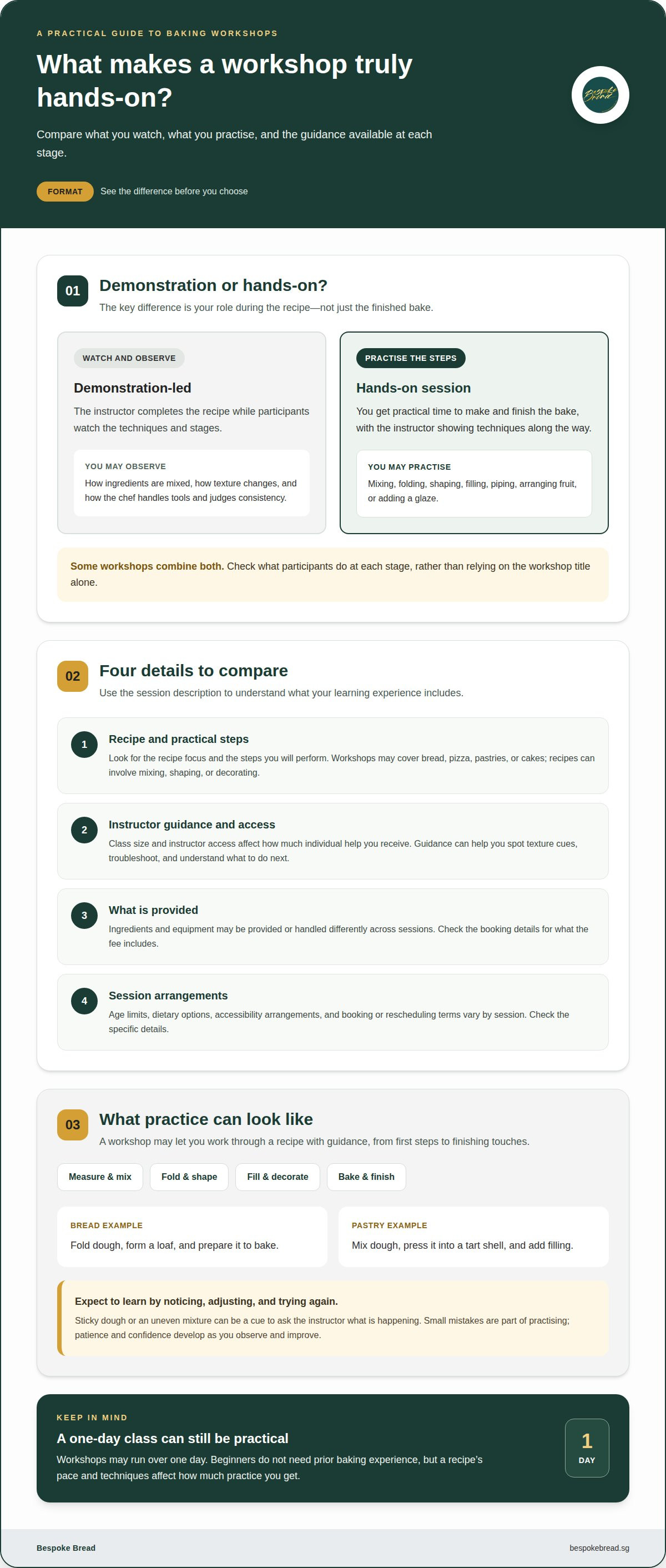
In a hands-on format, you measure and mix ingredients, then shape the dough yourself. For bread, that might mean folding dough, forming a loaf and preparing it to bake. Pastry sessions may involve mixing a dough, pressing it into a tart shell and adding filling. Look for clear details about which steps participants perform, rather than only watching the instructor.
Decorating can be hands-on too. You might pipe a topping, arrange fruit on a tart or finish a baked item with a glaze. These steps let you practise control and notice how small choices change the result. To compare workshops, consider the recipe, the practical steps included and how much guidance participants receive.
A demonstration-led session shows the instructor completing the recipe while participants observe. A hands-on session gives participants time to practise mixing, shaping or decorating, with the instructor showing techniques along the way. Some workshops combine both formats, so look for a description of the participant’s role at each stage.
In Singapore, workshops may focus on bread, pizza, pastries or cakes. A class can run over one day. Beginners don’t need prior baking experience to take part, but a recipe’s pace and techniques affect how much practice you get.
Expect basic hygiene steps, such as washing hands and keeping work surfaces clean. Wear comfortable clothes and closed-toe shoes; bring a container if the session asks you to take your bake home. Ingredients and equipment may be provided or handled differently across sessions, so read the booking details for what the fee includes.
Class size and instructor access affect how much individual help you receive. Booking, cancellation and rescheduling terms depend on the session. Age limits, dietary options and accessibility arrangements also vary, so use the session details to understand eligibility and available accommodations.
A chef demonstration lets you see a technique before trying it yourself. In one workshop, the instructor demonstrated five recipes: four cakes and one biscotti. Watch how the chef handles each stage, from mixing batter to judging texture. Seeing the sequence first gives beginners a practical reference when they practise. Notice how the instructor holds tools and responds to changes in consistency.
Guidance turns a demonstration into a learning experience. A facilitator can guide parents and children through baking steps when they need help. For example, the chef might explain how to combine ingredients, then show what a smooth mixture looks like. Clear explanations help you connect each action with its purpose. They also make it easier to spot where a process has gone off track.
Precision matters in baking, and a demonstration can make exact steps easier to follow. One recipe required mixing two ingredients at exactly 118 C. Watching the instructor manage that step shows why timing and attention matter. During your own attempt, ask what texture or appearance to look for. Those cues can guide you when a recipe gives little room for guesswork.
Troubleshooting is another useful part of instructor guidance. If dough feels too sticky or a mixture looks uneven, the instructor can help you understand what is happening and how to proceed. Listen for practical cues, such as how gently to fold a mixture or when to stop mixing, then apply that advice as you continue. A mistake becomes a useful lesson, not a reason to throw in the tea towel.
Baking teaches patience through visible cause and effect. Measure flour carefully, then observe how dough changes as water blends in and gluten develops. Shaping a loaf calls for steady pressure rather than a quick squeeze. Each step rewards attention to texture, temperature and timing. Small changes help explain why one batch feels different from the next.
Confidence grows when you connect an action with its result. If dough tears during shaping, pause and notice where it feels tight. Follow the instructor’s adjustment, then try again with gentler movements. That second attempt gives you a practical comparison, not just a finished loaf. You learn to respond to the dough instead of guessing.
Practice also makes unfamiliar steps feel less mysterious. One workshop reviewer suggested trying a bake 5-10 times before attending. Treat that as one reviewer’s advice, not an entry requirement. Repeating a recipe at home can help you spot familiar cues, such as a smooth dough or evenly mixed batter. In class, you can then focus on refining your technique.
Mistakes can become useful clues. A dense loaf may prompt you to review the mixing, shaping and proofing stages, rather than blame yourself. Ask the chef which cue to watch next time, then remember that detail for your next bake. This turns troubleshooting into a simple cycle: notice, adjust and practise. The takeaway is practical: patience comes from allowing each stage its needed attention, while confidence builds through trying, observing and improving. A crooked shape or uneven finish is still progress you can learn from.
A baking class in Singapore can be conducted over 1 day, during which participants learn baking and work together to create treats, complementing individual practice with shared effort.
Bespoke Bread offers hands-on baking classes with expert guidance and troubleshooting tips for home bakers. If you’re ready to practise techniques with a chef’s support, choose a class that matches the bake you want to learn, from sourdough and shiopan to pizza or French pastry tarts. Each gives you a focused way to turn workshop learning into confidence at home.
Not sure which bake suits your next step? Think about the skills you want to practise, such as working with dough or shaping pastry. Start with the class that makes you keen to roll up your sleeves and learn. Your attempts don’t need to look picture-perfect; each one can teach you something useful.
Explore Bespoke Bread’s baking classes and book the one that matches your interests. Bring your curiosity, and get ready to practise a new skill.
Knowing what to expect at a baking workshop can help you choose a class that fits the skills you want to develop. Your next step might be exploring a new dough, shaping a familiar favourite differently, or learning to decorate with more confidence. Choose the bake that sparks your curiosity, then give yourself room to practise and experiment.
Bespoke Bread offers Sourdough Baking Class - Fundamentals, Japanese Bread classes and Pizza Making classes, among other hands-on workshops. Each offers a different way to learn, so choose the flavour or technique you’re keen to explore. Progress doesn’t need to look perfect to feel rewarding. Patience can turn early attempts into skills you’ll enjoy using in your kitchen.
Ready to choose your next baking adventure? Contact Bespoke Bread about a workshop and take the next step. There’s plenty of joy to knead into the journey.
A typical workshop takes you from recipe preparation to a finished bake, with an instructor guiding each step. If you’re wondering what to expect at a baking workshop, you’ll usually handle ingredients and equipment while learning the techniques behind the recipe. Knowing what to expect at a baking workshop can help you arrive ready to participate, ask questions and take home useful skills. Bespoke Bread’s one-day classes include hands-on instruction and home-baking support.
Ingredients and equipment may be provided or handled differently across sessions; check the booking details to see what the fee includes.
0 comments