

Your basket is empty
Already have an account? Log in to check out faster.
Your basket
Your basket is empty
Already have an account? Log in to check out faster.

What if the secret to a madeleine’s signature hump starts before the oven does? A tender crumb and golden, shell-shaped edges come from careful technique, not luck. Learning how to bake perfect madeleines means paying attention to small details: brown butter adds nutty depth, while chilled batter and a well-timed burst of heat help create the characteristic shape.
That delicate texture can feel tricky to get just right, especially when the hump decides to play hide-and-seek. This guide breaks down how batter chilling, brown butter, oven temperature and baking time work together, with practical cues to help you bake with more confidence. You’ll see how to prepare and rest the batter, when to adjust the oven, and what to look for as the madeleines turn domed and golden. No pastry perfectionism required, just a little patience and a willingness to give the batter a good rest.
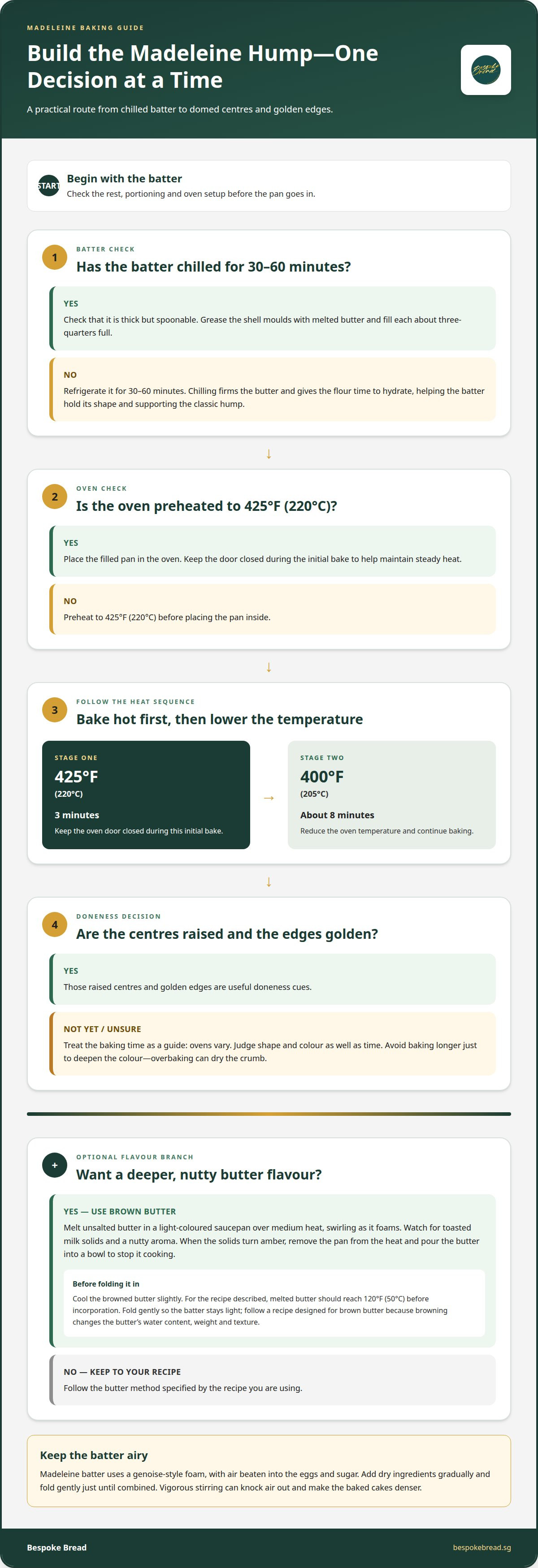
Oven heat helps shape the hump, while timing keeps the crumb tender. Follow the temperature sequence in your recipe, then judge doneness by colour and shape. When learning how to bake perfect madeleines, treat baking times as a guide and watch the shells as they cook.
Preheat the oven to 425°F (220°C), then place the filled madeleine pan inside. Bake for 3 minutes before reducing the temperature to 400°F (205°C). Continue baking for about 8 minutes, until the madeleines are domed and golden around the edges. Keep the door closed during the initial bake to help maintain steady heat.
After lowering the temperature, watch for a raised centre and golden edges. These are useful doneness cues. Avoid baking longer just to deepen the colour, as overbaking can dry the crumb. Since ovens vary, use the shape and colour as well as the stated time. Learning how to bake perfect madeleines means noticing these cues, not relying on the clock alone.
Bespoke Bread’s Korean Style Madeleine Baking Class offers hands-on practice with madeleine techniques. It’s a practical next step for turning what you’ve learned about batter, browning and baking into a more confident routine, with troubleshooting guidance when a hump comes out lopsided.
Choose guided practice if you learn best by doing or want to understand how each step affects the finished crumb. The class focuses on madeleines. For other baking interests, Bespoke Bread also offers Sourdough Baking Class - Fundamentals, Shiopan Japanese Bread Class Singapore and Pizza Making Class Singapore.
Ready to get hands-on? Explore the Korean Style Madeleine Baking Class, then contact Bespoke Bread to take your next baking step. There’s no need to be shell-shocked by a stubborn hump; you can keep practising, one batch at a time.
Treat your next bake as an experiment, not an exam. Note what you changed and what you observed in the finished madeleines. Did the flavour seem more buttery, or the crumb lighter? Those observations help you turn a recipe into a technique you can adjust with confidence.
Learning how to bake perfect madeleines is less about getting the same result every time and more about noticing how ingredients and handling work together. Try one thoughtful change per batch, then build on what you enjoy. Your signature bake takes shape one shell at a time.
Want a hands-on next step? Contact Bespoke Bread and keep your baking curiosity rising. Here’s to good crumbs and even better kitchen experiments!
Madeleines are small French bakes shaped like scallop shells, traditionally served as a sweet snack with tea or coffee. Their ridged edges and rounded backs make them easy to recognise. Recipes often include butter and citrus, such as lemon zest, for a fragrant, delicate flavour. Their size and shape come from baking the batter in moulded cavities.
Madeleines are closer to small sponge cakes than crisp cookies. An airy, egg-based batter gives them a light, tender interior, while butter adds a richer crumb than many plain sponges. They’re often grouped with cookies because they’re individually portioned and eaten by hand, but expect a soft, cake-like bite rather than a crunchy snap.
Mix the eggs and sugar until combined and airy, then add the sifted dry ingredients in stages. Fold with a spatula, bringing the mixture up from the bottom rather than beating it. Scrape around the bowl as you go. Stop when the last dry streaks disappear, then gently incorporate the butter.
Yes, chill madeleine batter for 30-60 minutes before baking. Cover the bowl so the batter doesn’t absorb fridge odours or form a dry surface. The pause also makes the mixture easier to handle when filling the moulds. If preparing ahead, keep it refrigerated and portion it only when you’re ready to bake.
Choose a madeleine pan with clearly defined shell-shaped wells to give each cake its classic ridges. Brush the cavities with a thin, even coat of melted butter, reaching into the grooves. Dust lightly with flour, then tap out the excess to avoid a floury coating. Grease the pan again between batches if needed.
0 comments