

Your basket is empty
Already have an account? Log in to check out faster.
Your basket
Your basket is empty
Already have an account? Log in to check out faster.

A tart shell usually shrinks because the pastry was stretched or overworked, or it went into the oven before chilling. If you’re wondering why your tart shell shrank, chill the fitted shell for about 30 minutes and use baking weights to support its sides. Filling level matters, too.
It’s frustrating to bake a beautiful tart shell only to watch its edges slip down the tin. The good news is that a few small adjustments can help pastry hold its shape. Learn how to chill and handle the dough, when to use baking weights, and how to judge the filling level. If the shell still shrinks, use its final height to guide the filling so your tart stays neat and delicious.
Handle the pastry gently, then chill it at two stages: before rolling and after lining the tin. A fitted shell can rest in the fridge for 15-30 minutes before baking.
Press the dough into the tart pan; don’t stretch it to reach the rim. Stretching can make pastry pull back in the oven. Chilling helps relax the gluten and firm the fat, which can reduce shrinkage. Overworked dough may feel tough or spring back as you roll it. Warm dough can feel soft and greasy, making it harder to handle.
After mixing, bring the dough together gently, shape it into a disc, wrap it, and refrigerate it for 30 minutes. Avoid kneading: extra handling can tighten the gluten and encourage the pastry to shrink. Before rolling, check that the dough feels cool but pliable. If it cracks at the edges, let it soften briefly rather than forcing it into shape.
Roll the rested dough, lower it into the tin, and press it against the base and sides without pulling. Trim or leave a small overhang, then refrigerate the lined tin for about 30 minutes before baking. This second chill gives the gluten time to relax after shaping and firms the fat. Keep the shell cold until it goes into the oven.
Weights hold pastry against the tin while the heat sets its shape. Blind-bake the lined shell to help stop its sides from sliding down.
Line the pastry with baking paper, then fill the shell to the brim with pie weights, baking beans, or uncooked rice. Their weight supports the sides as the fat melts and the pastry begins to set. Docking makes small holes in the base, but it doesn’t support the walls, so it can’t replace weights. Spread the weights evenly into the corners.
Start blind baking at 190-205°C to set the pastry quickly. Keep the paper and weights in place for about three-quarters of the usual baking time, or until the shell just colours. Remove them for the final few minutes so the base can dry out. Follow the recipe’s baking time and look for a set, lightly coloured shell before adding filling.
If the pastry is still baking and remains soft, carefully press a slumped side back against the tin with a spoon. Don’t force it if the pastry has already set. If a cooled shell has lost height, trim any uneven edge and keep the filling below the lowest part of the rim. Next time, pack the weights right up to the sides to support the pastry as it bakes.
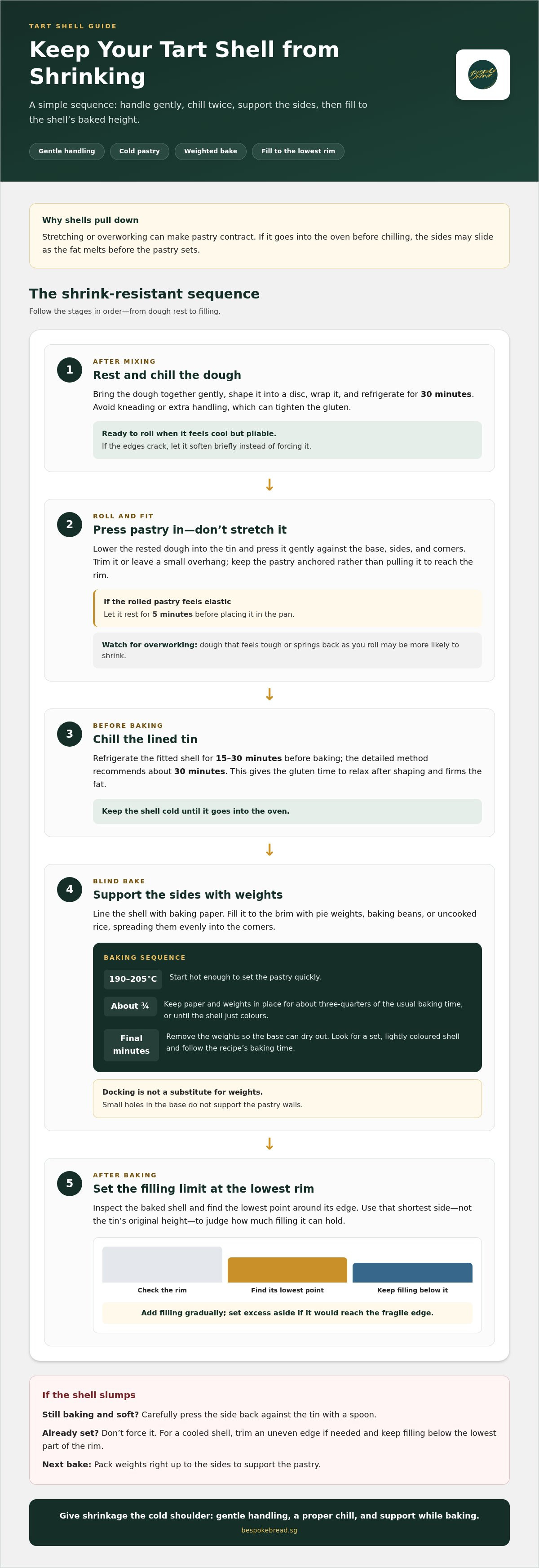
A lower edge changes how much filling the shell can hold. Use the baked shell’s shortest side as your guide, not the tin’s original height.
Bespoke Bread’s Sourdough Baking Class - Fundamentals gives beginners hands-on instruction and troubleshooting as they build confidence working with dough. It focuses on sourdough, not tart pastry, so it’s useful for broader baking practice rather than a substitute for learning tart-shell techniques. For more focused pastry practice, the French Pastry Tarts Class Singapore is a closer fit.
Choose a class if you’d like expert guidance as you practise baking techniques and troubleshoot along the way. Bring what you learn back to your kitchen: careful handling, chilling, and attention to filling level can help tart shells keep their shape. Ready to build your baking skills? Explore Bespoke Bread’s French Pastry Tarts Class Singapore.
If you’ve wondered, “Why did my tart shell shrink?” treat your next bake as a chance to learn how the pastry behaves. Keep a simple pastry notebook: note how the dough felt, how the baked edge looked, and how much filling the shell held comfortably. Those observations can help you spot patterns and make considered adjustments next time.
Small experiments are part of becoming a more confident baker. Change one technique at a time, then compare the results, rather than changing everything at once. If you’d like guidance as you keep building your baking skills, contact Bespoke Bread.
Every shell gets another chance. Keep practising, and your next tart could be a real crust above the rest.
Tart shells shrink when pastry contracts in the oven, often because handling tightened its gluten or the dough was stretched into the tin. As the fat melts before the pastry sets, the sides may slide down too. If you’re asking why your tart shell shrank, consider whether you pulled it to fit, rested it after shaping, and supported it during blind baking.
Repeated kneading or rerolling develops gluten, making pastry more elastic. That elasticity can encourage the dough to spring back from the tin as it bakes. For example, gathering scraps into a ball and rolling them repeatedly can make the final shell tougher than the first. Bring the dough together gently, and don’t work it until smooth like bread dough.
Rest pastry for at least 30-60 minutes after making it, then chill the lined shell before baking. The first rest gives the dough time to relax after mixing; the second firms it after rolling and fitting. If your kitchen is warm or the pastry becomes soft while shaping, return it to the fridge until it feels firm enough to handle.
Flour affects how much gluten develops, so mixing and handling matter alongside the flour itself. Too much fat can weaken the pastry’s structure; a general pie-pastry fat ratio is 60-80% by baker’s percentage. Butter also melts at a lower temperature than vegetable shortening, so a butter-based shell may need careful chilling and support as it bakes.
0 comments