

Your basket is empty
Already have an account? Log in to check out faster.
Your basket
Your basket is empty
Already have an account? Log in to check out faster.

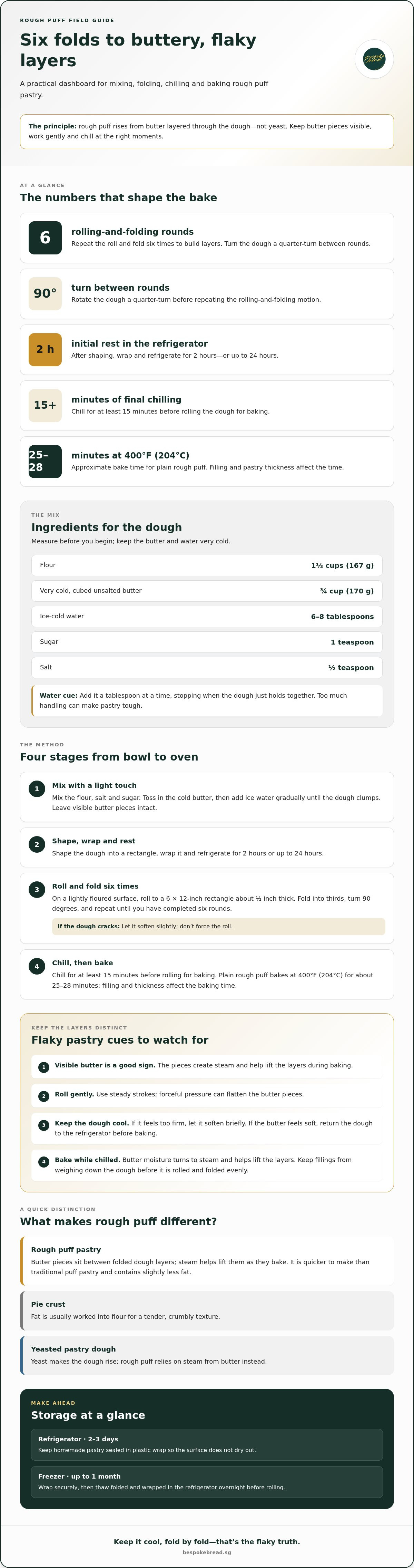
Six folds turn rough puff into a stack of buttery layers, and that’s the heart of how to make flaky pastry dough. Roll and fold the dough six times, turning it 90 degrees between rounds. Unlike yeasted dough, rough puff relies on layers of butter, not yeast, to lift in the oven.
Want pastry that shatters delicately instead of turning dense or tough? Learn how to make flaky pastry dough with the rough puff method, and see how it differs from pie crust and yeasted dough. The key is cold butter, a light touch and well-timed chilling. Follow the steps and look for practical cues as you work. A few visible streaks of butter are a good sign, and an uneven rectangle can still bake into beautifully flaky pastry.
Rough puff, also called flaky pastry, creates layers by folding butter through dough. It is quicker to make than traditional puff pastry and contains slightly less fat.
Roll the dough on a lightly floured surface into a 6 × 12-inch rectangle, about ½ inch thick, then fold it into thirds. Turn it 90 degrees and repeat until you’ve rolled and folded the dough six times. Keep visible butter pieces intact; they create steam and lift during baking. Chill the dough for at least 15 minutes before use.
Measure 1⅓ cups (167 g) flour, ¾ cup (170 g) very cold cubed unsalted butter, 6-8 tablespoons ice-cold water, 1 teaspoon sugar, and ½ teaspoon salt. This ratio gives you enough butter for distinct layers without turning the dough greasy. Add water gradually, stopping when the mixture just holds together; too much handling can make pastry tough.
To keep pastry tender, add water gradually and mix only until the dough comes together. Chill it before rolling to help limit shrinkage. For a savoury bake, add cheese after shaping rather than folding it into the dough, where it can disrupt the layers.
Choose storage and handling to suit your bake. Rough puff relies on distinct butter layers, while pie crust and yeasted pastry dough develop their textures in different ways.
Want hands-on practice with pastry techniques? Bespoke Bread’s French Pastry Tarts Class Singapore offers a focused next step for learning pastry by making.
Extra flakes come from keeping the butter in pieces through mixing, rolling and baking. When practising how to make flaky pastry dough, focus on keeping it cold and using gentle pressure at every stage.
Want guided practice with pastry? Explore the French Pastry Tarts Class Singapore, and give your baking skills a flaky-good next step.
Bespoke Bread’s Sourdough Baking Class - Fundamentals is a natural next step if you’d like to build skills beyond pastry. Rough puff teaches you to handle cold butter and layers; sourdough is a different craft, with hands-on instruction in making bread and working through common baking challenges.
Choose a class that matches what you’d like to bake next. Bespoke Bread’s French Pastry Tarts Class Singapore offers more pastry practice, while its Pizza Making Class Singapore gives you a savoury dough project. Both offer practical ways to learn by baking, not just by reading recipes.
Ready to keep your baking journey rising? Explore Bespoke Bread’s hands-on classes and choose your next bake.
Treat your next pastry bake as an experiment, not an exam. Try a new shape or filling, and change one detail at a time. This makes it easier to see what affects the texture and finish. An uneven edge isn’t a baking blunder; it’s a useful note for next time.
If learning how to make flaky pastry dough has sparked a wider appetite for baking, keep following that curiosity. Explore a different dough, practise a new technique, or bring your questions to a welcoming baking community. Each bake builds confidence, even when the first attempt looks a little wonky.
Contact Bespoke Bread to explore your next baking step. Roll with the learning, enjoy the process, and keep your pastry plans on a roll.
Flaky pastry is a layered dough, often made using the rough puff method, in which pieces of butter separate the dough as it bakes. The result is crisp, distinct flakes rather than the tender, crumbly texture of many pie crusts. Unlike yeasted dough, flaky pastry rises through steam, not yeast. Use it for savoury parcels, cheese twists or fruit turnovers.
Use butter straight from the refrigerator and ice-cold water. The butter needs to stay firm and in pieces during mixing and rolling; softened butter blends into the flour, reducing separation between the layers. If you grate the butter for a quick pastry, briefly freeze it first so it stays firm against the grater.
Give rough puff dough six rolling-and-folding turns, rotating it 90 degrees between turns. That repeated layering creates the pastry’s flaky structure. Keep the edges aligned as you fold, and brush away excess flour before each turn. If the dough starts to feel soft or sticky, pause and chill it before continuing.
For rough puff, chill the shaped dough for 2 hours to 24 hours before rolling and folding. After the final fold, refrigerate it for at least 15 minutes, and up to 24 hours, before use. If it feels too firm to roll straight from the fridge, let it rest briefly until pliable, not warm.
Yes. Briefly pulse the flour and cold butter, keeping visible pieces of butter instead of blending them into fine crumbs. Add cold water and pulse four or five times, just until the mixture starts to clump. Tip it out and bring it together gently by hand. Stop early, since a food processor can quickly overwork the dough.
0 comments