
How to Make Chewy Bagels with Bread Flour and Malt Syrup

How to Make Chewy Bagels with Bread Flour and Malt Syrup

For how to make chewy bagels, start with bread flour, add barley malt syrup for a traditional malty flavour, and give the shaped dough a short rest before boiling. Rest the bagels for 10 minutes, boil them for 1 minute o…

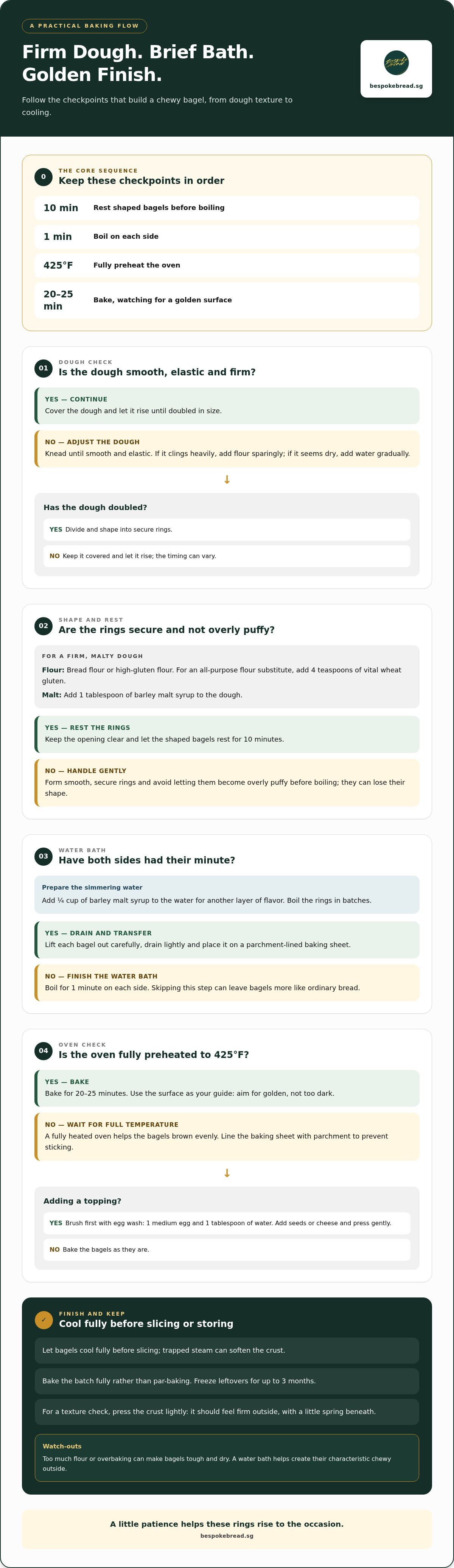
For how to make chewy bagels, start with bread flour, add barley malt syrup for a traditional malty flavour, and give the shaped dough a short rest before boiling. Rest the bagels for 10 minutes, boil them for 1 minute on each side, then bake at 425ºF for 20-25 minutes, until golden brown. That’s the chewy, glossy path from dough to delicious.

A good bagel has a satisfying bounce, not a chew that feels like a workout. Bread flour helps create a strong, elastic dough, while malt syrup adds a distinctive flavour. The water bath and oven finish help develop the characteristic chewy crust. This guide covers the key steps, from mixing and shaping to boiling and baking, so you can make chewy bagels at home with confidence. If your first ring looks a little uneven, don’t worry: it can still taste delicious.

Key Takeaways

  • Measure 440 g of bread flour or high-gluten flour for a sturdy dough that can develop a satisfying chew.
  • Add barley malt syrup to bring traditional malty flavour, and use it in the boiling water bath for another layer of bagel character.
  • Knead until the dough feels smooth and elastic, then shape gently so the rings keep their form through boiling and baking.
  • Want a hands-on way to build baking confidence? Bespoke Bread’s Sourdough Baking Class - Fundamentals offers guided practice and troubleshooting tips for home bakers, so you can keep your skills on a roll.

Baking temperature and time

Common mistakes include skipping the water bath, adding too much flour while kneading, and baking until the crust gets too dark. Without boiling, bagels can turn out more like ordinary bread; excess flour or overbaking can make them tough and dry.

  1. Preheat fully. Set the oven to 425ºF before baking. A properly heated oven helps the bagels brown evenly, so give it time to reach temperature before loading the tray. Line the baking sheet with parchment to prevent sticking and make cleanup easier.
  2. Boil before baking. Let shaped bagels rest for 10 minutes, then boil each for 1 minute on each side. This water-bath step helps create the characteristic chewy outside. Lift each ring out carefully, drain it, and place it on the parchment-lined tray.
  3. Bake until golden. Bake for 20-25 minutes, watching for a golden surface rather than relying only on the timer. If you add a topping, brush the bagels first with egg wash made from 1 medium egg and 1 tablespoon of water. Try seeds or cheese, and press toppings gently so they stay put.
  4. Cool and store. Let the baked bagels cool before slicing. Skip par-baking for a standard batch; bake them fully, then freeze leftovers for up to 3 months. To check the texture before serving, press the crust lightly with a finger: it should feel firm outside, with a little spring beneath.

Barley malt syrup in the dough and boiling water

For chewy bagels that hold their shape, form a smooth, firm dough into rings and handle them gently. Avoid adding too much flour, and don’t let the shaped rings become overly puffy before boiling.

  1. Measure the ingredients. Combine the dry ingredients with water to make a firm dough. Add 1 tablespoon of barley malt syrup for a traditional malty flavor. The dough should feel firm, not wet; add water gradually if it seems dry.
  2. Mix and knead. Stir until no dry flour remains, then knead by hand or use a stand mixer on medium-low speed. Knead until the dough feels smooth and elastic, rather than sticky. A recipe may call for 6-7 minutes of kneading, but use the dough’s texture as your guide.
  3. Let the dough rise. Cover the dough and let it rise until doubled in size; the timing can vary. A steady rise gives the dough time to develop structure. If it grows too puffy, the rings may lose their shape during boiling.
  4. Shape and boil. Divide and roll the dough, then join each piece into a secure ring. Keep the opening clear as the dough expands. Add ¼ cup of barley malt syrup to simmering water for extra flavor, then boil the rings in batches. Drain them lightly before baking; an egg wash can help toppings adhere.

For hands-on practice with shaping and dough texture, try the Japanese Bagel & German Pretzel Baking Class Singapore. A little care at each stage helps these rings hold their shape and chew.
How to make chewy bagels

Bread flour and chewy texture

  1. Choose a strong flour. Bread flour or high-gluten flour helps form the elastic gluten network behind a bagel’s chewy bite. As you knead, the dough should become smooth and springy, not slack or batter-like. That sturdy structure helps each shaped ring hold its center open through boiling and baking.
  2. Adjust if using all-purpose flour. For this recipe, add 4 teaspoons of vital wheat gluten to all-purpose flour as a bread-flour substitute. Mix it evenly through the dry ingredients before adding water, so the dough develops consistent strength instead of uneven patches.
  3. Use the dough as your guide. Knead until the surface feels smooth and the dough springs back gently when pressed. If it clings heavily to your hands, sprinkle on flour sparingly; too much can make the finished bagel dense. A firm dough should stretch without tearing easily.
  4. Watch the rise, not just the clock. Cover the dough at room temperature and let it rise until doubled. Overproofed dough can feel fragile and lose structure during shaping, while under-risen dough may bake up tight. After dividing, shape each piece firmly, sealing the join so the ring stays intact.
  5. Keep the texture after baking. Cool bagels fully before storing, since trapped steam softens the crust. Freeze extras for longer storage, then thaw before serving. For guided practice with dough handling and texture, explore the Bread Foundation Class for Beginners.

Bespoke Bread: Sourdough Baking Class - Fundamentals

After trying bagels at home, Bespoke Bread’s Sourdough Baking Class - Fundamentals offers hands-on practice in core bread-making skills. The class focuses on sourdough rather than bagels, but guided work with dough handling and fermentation can help you understand how mixing, resting, and shaping affect texture.

Choose the class if you’d like expert guidance, troubleshooting tips, and support as you build confidence baking at home. For bagel-focused practice, Bespoke Bread also offers the Japanese Bagel & German Pretzel Baking Class Singapore. Each class has a different focus, so pick the one that best fits the skills you want to develop.

Ready to learn? Visit bespokebread.sg to explore Bespoke Bread’s classes and take your next step in baking.

Keep Your Baking Journey Rolling

Learning how to make chewy bagels can spark a wider interest in baking. Try shaping a different dough, experiment with flavours, or build your skills with another style of bread. Bespoke Bread’s Shiopan Japanese Bread Class Singapore and Pizza Making Class Singapore offer hands-on ways to keep learning in the kitchen.

As you practise making chewy bagels, note what you change and how the dough feels. Once you’re more confident, try a new flavour or baking project. Small experiments can turn each bake into a useful, tasty lesson.

Ready to find your next baking project? Contact Bespoke Bread and take the next step at your own pace. Happy baking, and may your kitchen adventures always rise to the occasion.

Frequently Asked Questions

What ingredients make bagels chewy?

Bread flour and water provide the dough’s structure, while barley malt syrup adds a traditional malty flavour. Bagel chew comes mainly from gluten development and boiling the shaped dough, not from syrup alone. Treat malt as a flavour note, not a shortcut: adding more won’t rescue slack dough or replace proper kneading.

What flour is best for chewy homemade bagels?

Bread flour or high-gluten flour is a good choice because it develops an elastic dough that can hold its shape. Avoid pastry flour, which is designed for tender, delicate bakes rather than a springy bagel crumb. When choosing flour, look for one labelled for bread-making, then assess the dough’s strength and feel as you work.

What is the best bagel dough hydration ratio?

There’s no single ideal ratio for every flour. Aim for a firm, workable dough rather than one that’s wet and slack. Hydration is the weight of water divided by the weight of flour, expressed as a percentage. Since flour absorbs water differently, add the liquid gradually and stop when the dough comes together smoothly without feeling sticky or dry.

How long should bagel dough be kneaded and proofed?

Knead until the dough feels smooth, elastic, and resilient when gently stretched. Proof it until visibly expanded, using its growth rather than the clock alone as your guide. A cool kitchen can slow fermentation, while a warmer spot can speed it up. If the dough feels fragile and overly airy, shape it gently.

Why do bagels need to be boiled before baking?

Boiling sets the outside of each ring before it goes into the oven, helping create the distinctive chewy skin and limiting uncontrolled expansion. It also gives toppings a surface to cling to once the rings are drained. Keep the water at a gentle boil: a vigorous churn can knock the rings out of shape.

See all articles in Knead to Doughminate

0 comments

Leave a comment

Please note, comments need to be approved before they are published.