

Your basket is empty
Already have an account? Log in to check out faster.
Your basket
Your basket is empty
Already have an account? Log in to check out faster.

What if the trick to shaping sticky dough isn’t adding more flour, but giving it less of a wrestling match? If you’re searching for how to shape high hydration dough, you’ve probably met the clingy hands, spreading loaf, and sinking feeling that every touch is letting precious air escape. You’re not doing something wrong: high-hydration dough is meant to feel tacky, and its structure needs gentle support.
This guide will help you judge when dough is ready to shape, handle it with less sticking and unnecessary degassing, and build enough surface tension for a loaf that holds its shape. You’ll find practical cues and controlled movements, from preparing your hands and scraper to pre-shaping and final shaping. No flour blizzard or dough wrestling match. Just patience, a lighter touch, and a loaf with plenty of lift.
High-hydration dough can seem determined to spread across the bench. Hydration is the weight of water compared with the weight of flour in a dough; there’s no universal cutoff that makes it “high.” The useful distinction is this: hydration describes a recipe’s water-to-flour ratio, while consistency describes how the dough feels and behaves.
More water usually means a softer, stickier dough, but hydration isn’t the whole story. Flours absorb water differently, and fermentation changes how cohesive or slack the dough feels. Two doughs with the same hydration can therefore handle differently. Learning how to shape high hydration dough starts with reading the dough in front of you, rather than relying on a number alone.
Before shaping, the dough needs a gluten network strong enough to hold together and trap gas. Kneading is one way to develop gluten structure; for wetter dough, gentle folds during fermentation can help organise and strengthen it without rough handling.
Look for signs of strength instead of following a rigid timer. When lifted, dough that is gaining strength feels more cohesive, stretches with some elastic response, and holds together instead of flowing straight back into a puddle. It may still be tacky. Tacky doesn’t mean doomed.
If the dough feels weak and tears or spreads as soon as you move it, shaping harder won’t fix the underlying issue. It may need more strength-building time. If it’s over-fermented, its structure may have weakened, and aggressive reshaping can make matters worse. Shape when the dough feels supported enough to handle, not simply because the clock says it’s time.
Ready to turn a soft mass into a loaf with lift? Work with the dough, not against it. A light touch and a scraper are more useful than a flour blizzard.
In short: loosen, pre-shape, pause, fold and seal, then use small, controlled turns to create tension without tearing. For another look at gentle folding and handling, explore King Arthur Baking’s 5 best tips on working with high-hydration doughs.
Think of your hands as guides and the scraper as support. If dough clings to your fingers, dampen them or dust them lightly, then use the scraper to lift and turn instead of pulling. Transfer the shaped loaf into its proofing vessel seam-side up or down, according to the vessel and method you’re using. Beginners who want guided, hands-on practice can explore Bespoke Bread’s Sourdough Baking Class - Fundamentals.
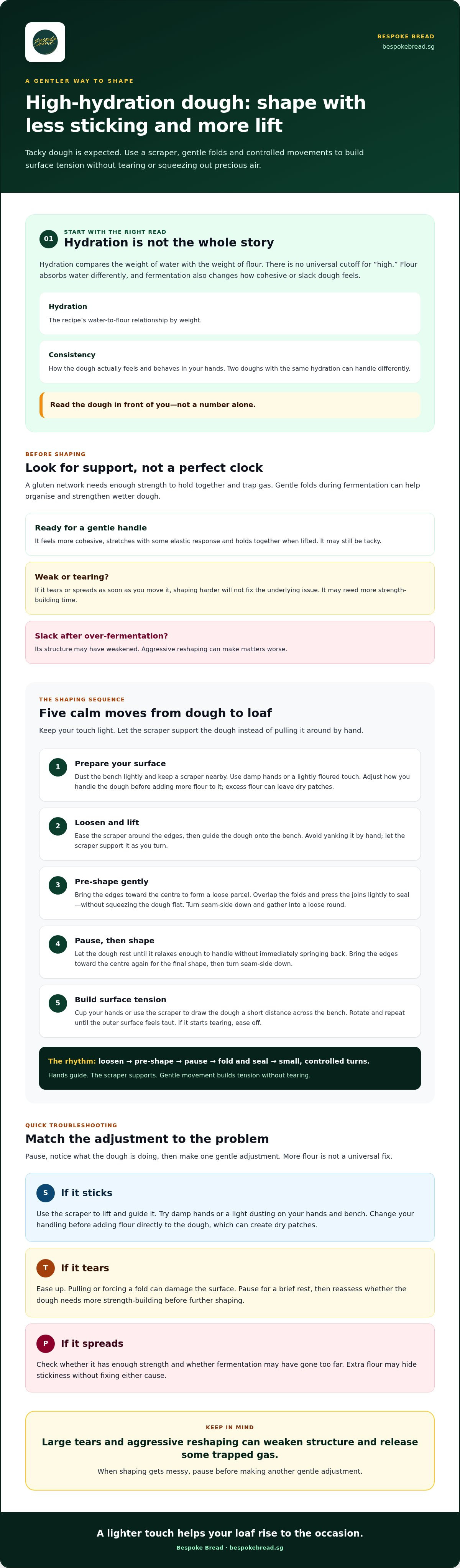
Sticky, tearing, or spreading dough each needs a different response. More flour isn’t a magic fix, and repeated reshaping can turn a small wobble into a structural flapjack. Pause, notice what the dough is doing, then make one gentle adjustment.
A large tear or aggressive reshaping can disturb the dough’s structure and release some of its trapped gas. Give it a moment before acting again. Then try one small adjustment, such as tucking an edge under with the scraper, and stop if the dough begins to resist or tear. For more ideas on gentle handling, read King Arthur Baking’s tips for working with high-hydration doughs.
If you’d like guided practice as you build confidence with dough handling, Bespoke Bread’s Sourdough Baking Class - Fundamentals is a one-day, hands-on class for beginners, with troubleshooting tips and lifetime support for home bakers. Keep your touch gentle, and let the dough do its rising to the occasion.
High-hydration dough doesn’t need a wrestling match. Read its cues, build strength before shaping, and use gentle folds and controlled movements to create surface tension without squeezing out its lift. If the dough sticks, tears, or spreads, pause and adjust your handling rather than reaching straight for more flour.
With practice, you’ll get a feel for how to shape high hydration dough while keeping its structure intact. Every dough teaches you something, even the sticky ones. Keep your hands gentle, trust the process, and soon you’ll be on a roll.
High-hydration dough has a relatively high amount of water compared with flour, measured by weight, but there’s no universal cutoff for “high.” Hydration describes the recipe’s water-to-flour ratio, not a guaranteed dough texture. Flour type and fermentation also affect how the dough feels, so doughs with the same hydration can vary in stickiness and strength.
Use damp hands or a lightly floured touch, and let a bench scraper do much of the lifting and turning. If the dough still clings, adjust your hand technique before adding flour directly to it. A light dusting on the bench can help, but too much flour may leave dry patches and change the dough’s texture.
Yes. To learn how to shape high hydration dough without knocking out too much air, use gentle folds and controlled movements rather than pressing or squeezing the dough. Some gas will shift during shaping, and that’s normal. Aim to create a taut outer surface while keeping the dough’s structure intact, and stop if it starts tearing.
Dough often spreads because it hasn’t built enough strength, or because fermentation has weakened its structure. Check whether it feels cohesive and elastic, and consider whether it may need more development or has fermented too far. Extra flour isn’t a universal fix. Handle it gently, and make one small adjustment rather than repeatedly reshaping it.
Ready to practise with expert guidance? Book Bespoke Bread’s Sourdough Baking Class - Fundamentals for hands-on instruction, troubleshooting tips, and support as you continue baking at home.
0 comments