

Your basket is empty
Already have an account? Log in to check out faster.
Your basket
Your basket is empty
Already have an account? Log in to check out faster.

What if your sourdough discard isn’t waste at all, but the missing ingredient in your next snack? If you’ve ever felt guilty tipping it away, you’re not alone. Knowing what to do with sourdough discard can feel tricky, especially when recipes don’t say whether to use it fresh or chilled, or whether it will help a bake rise.
Discard can add tang and flavour, but it usually needs another leavener to provide lift. This guide shares eight beginner-friendly ideas, from crisp crackers to fluffy pancakes, so you can match a recipe to the amount you have and the texture you want. You’ll also learn how freshness can affect flavour and how to use discard with more confidence.
Sourdough discard is the portion of starter removed during feeding, before the remaining starter is refreshed with flour and water. It’s different from active, recently fed starter, which has been refreshed and is typically used when a recipe relies on fermentation for lift. Discard can add flavour and moisture, but it may no longer be active enough to raise a dough or batter. Many discard recipes include baking powder, baking soda or yeast for a more dependable rise.
Think of discard as an ingredient, not a failed starter. Its tang can add depth to crackers, pancakes and other bakes, while its flavour changes as it sits. For a deeper look at the starter behind it, explore this guide to sourdough.
Often, but follow the recipe. Some recipes are designed for chilled discard; in others, discard closer to room temperature may mix in more smoothly. Freshness and acidity can also affect the result. Milder discard may suit a sweeter bake, while more acidic discard can bring extra tang to savoury recipes. If the recipe doesn’t specify, check its instructions or tested guidance instead of assuming all discard behaves alike.
Before baking, consider how the discard was stored and whether it looks and smells as expected. Don’t rely on age alone to decide whether it’s safe. Check reliable food-safety guidance, and throw it away if you’re unsure about its condition. Want to understand how feeding affects your starter? Bespoke Bread’s Sourdough Baking Class - Fundamentals covers core skills for beginners, with expert instruction and troubleshooting tips.
Looking for what to do with sourdough discard? Choose based on the amount you have, the time you want to spend and the texture you’re after. In most of these bakes, discard adds tang and moisture, while the other ingredients provide structure. Here are eight ideas, from quick griddle bakes to doughs that take more time.
For dough-based bakes, time and temperature can influence starter activity. South Dakota State University Extension explains the science behind starter behaviour.
For a simple first bake, try pancakes or crackers. Choose flatbread or pizza when you want a savoury dough, and check the recipe’s preparation time before you start. For muffins, quick breads, cookies or scones, use a recipe that specifies how much discard to add. Avoid changing the flour, liquid or discard amounts casually, since that can affect the texture. If you’d like guided practice with starter fundamentals, explore Bespoke Bread’s Sourdough Baking Class - Fundamentals.
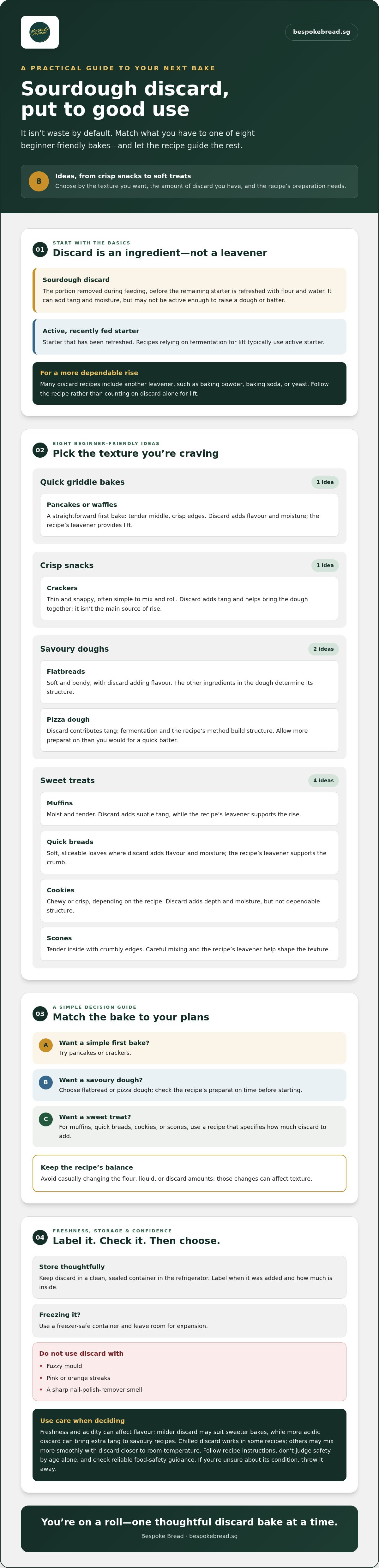
A simple routine makes deciding what to do with sourdough discard easier: label it, store it, check it, then pick a recipe that fits. Keep discard in a clean, sealed container in the refrigerator, and note the date and amount on the label. If you freeze it, use a freezer-safe container and leave room for expansion. For storage duration and food-safety advice, follow current guidance from a reliable food-safety source rather than guessing.
Use this simple routine to make your next bake easier:
Keep a note of which recipes worked well and how the discard tasted. Over time, this can help you notice your starter’s patterns without turning every bake into a guessing game. If you’d like help with feeding and maintaining a starter, Bespoke Bread’s Sourdough Baking Class - Fundamentals offers beginner-friendly, hands-on instruction and troubleshooting tips.
Now you know what to do with sourdough discard: treat it as a flavourful ingredient, choose a bake that suits the amount you have, and check its condition before using it. Pancakes or crackers are approachable first tries, while savoury doughs and sweet bakes give you more ways to experiment.
Want to feel more confident caring for your starter? Explore Bespoke Bread’s Sourdough Baking Class - Fundamentals, a one-day, hands-on class for beginners with troubleshooting tips and lifetime support for home bakers. Book a session and build your skills one bake at a time.
You can use sourdough discard in pancakes or waffles, crackers, flatbreads, pizza dough, muffins, quick breads, cookies and scones. Choose based on the texture and effort you’re after: pancakes are soft and quick to cook, while crackers bake up crisp. Discard mainly contributes flavour and moisture, so follow a tested recipe for dependable structure and rise.
Yes, if the recipe allows for chilled discard. Some batters mix smoothly with it straight from the fridge; others are easier to combine when the discard has warmed closer to room temperature. Its freshness and acidity can also affect flavour and texture. Follow the recipe’s instructions, and check that the discard was stored properly and still looks and smells normal.
Usually not as a direct swap. Discard hasn’t been freshly fed and may have little leavening power, while active starter is refreshed and can help fermented dough rise. In discard recipes, another leavener, such as baking powder, baking soda or yeast, often supplies the lift. Use the starter type specified in the recipe, especially for bread that relies on fermentation.
Throw it away if you see fuzzy mould or pink or orange streaks, or notice a sharp smell like nail polish remover. A dark liquid layer, often called hooch, can be a normal fermentation by-product; it may be stirred in or poured off. If you’re uncertain about its condition or storage, play it safe and discard it.
0 comments