

Your basket is empty
Already have an account? Log in to check out faster.
Your basket
Your basket is empty
Already have an account? Log in to check out faster.

What if the 80% humidity in your kitchen was actually your greatest baking ally instead of your stickiest nightmare? You've likely felt the frustration of dough that clings to your fingers like a kneady toddler or a loaf that emerges from the oven looking more like a dense pancake than a crusty boule. It's enough to make you want to give up before you've even started. We get it; baking in the tropics is a whole different beast.
This guide will show you how to learn to bake bread Singapore style, turning that intense moisture into your secret weapon for the perfect rise. We'll explore the science of yeast in our climate, slice through the technical jargon, and help you find a supportive community. From mastering basic techniques to joining our Bread Foundation Class for Beginners, your journey to artisan mastery starts right here.
Ever wondered why that supermarket loaf stays "fresh" for weeks? It's usually packed with preservatives that your body doesn't actually knead. When you decide to learn to bake bread Singapore, you're choosing a path of edible art. It’s a crust-worthy blend of chemistry and patience. Looking back at the history of bread, we see it has always been about community and craft. Today, it’s your ticket to a healthier lifestyle, free from the mystery additives of commercial slices.
Beyond the nutrition, there’s a mental "rise" that comes with the process. In our fast-paced city, the tactile rhythm of kneading is a top-tier stress-reliever. It’s hard to worry about emails when your hands are covered in flour! It’s a meditative practice that yields a delicious reward. Why settle for a half-baked hobby when you can create something truly spectacular?
Mastering the oven starts with just four humble heroes: flour, water, salt, and yeast. These ingredients work together to create gluten development, which is essentially the backbone of your loaf. Without strong gluten, your bread won't have the structure to hold those beautiful air bubbles. It sounds technical, but it’s actually quite dough-lightful once you get the hang of it!
If the science feels a bit heavy, don't worry. We recommend starting with a bread foundation class. It’s the perfect way to master the core mechanics before you tackle more complex styles. You'll find that with the right guidance, you'll be on a roll in no time.
Ready to get your hands dough-ty? If you want to learn to bake bread Singapore style, you need a solid game plan to avoid a total "dough-saster." It’s about more than just following a recipe; it’s about understanding the rhythm of the dough in our unique environment. Success in the kitchen is often a matter of preparation and patience.
Our high humidity is like high-octane fuel for yeast. It speeds up fermentation significantly, which often leads to over-proofed, flat bread. To keep things under control, try using chilled water or mixing in an air-conditioned room to slow down the yeast’s frantic activity. Knowing how to select healthy breads starts with understanding these basics of fermentation. If your loaves are still coming out a bit sad, check out this guide on why sourdough might be flat in Singapore for deeper troubleshooting. Ready to rise to the challenge? You can always explore our workshops to get hands-on help.
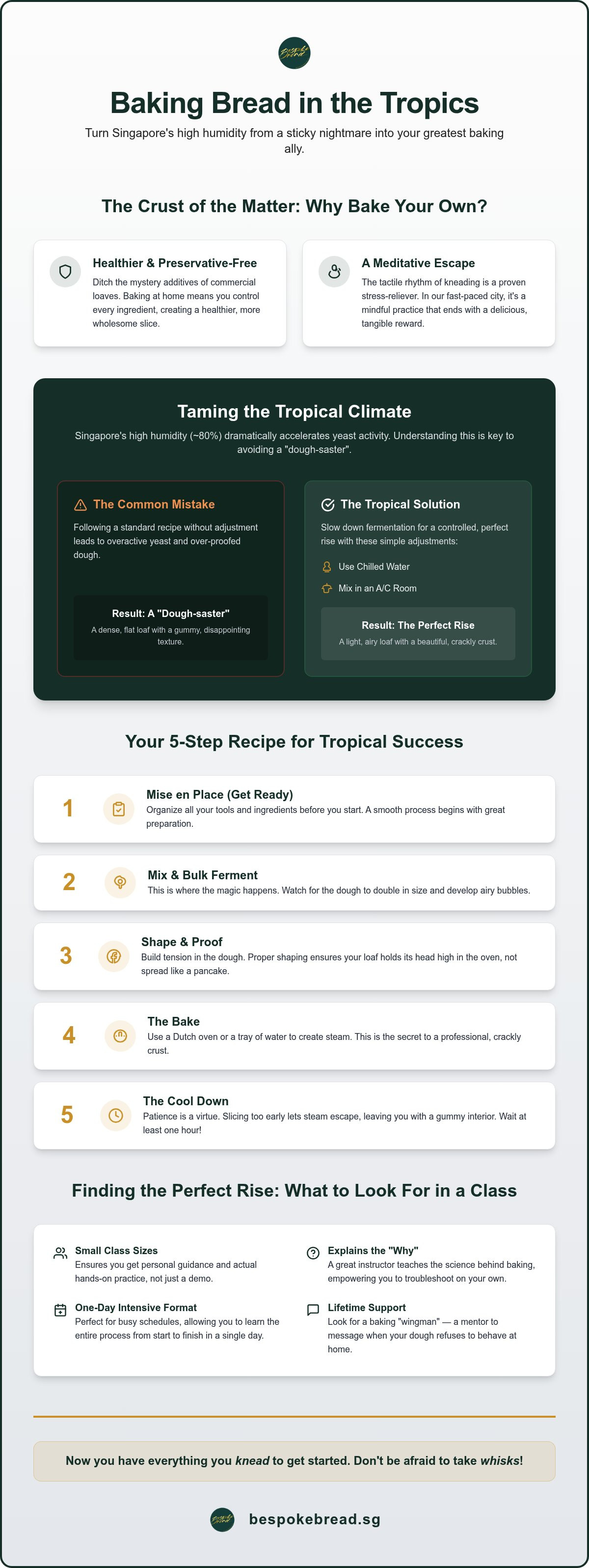
Searching for the right place to learn to bake bread Singapore can feel like looking for a needle in a haystack of flour. Not all workshops are created equal. You want a studio that prioritizes small class sizes. This ensures you get actual hands-on practice rather than just watching a demo from the back row. A great instructor explains the "why" behind the science, giving you the tools to troubleshoot your own kitchen adventures long after you leave the studio.
If you’re craving a tangy challenge, our Sourdough Baking Class - Fundamentals is the ultimate entry point. It’s designed to take the fear out of fermentation. More into soft, fluffy textures? You'll be on a roll with our Japanese Bread Class. Before you book, check out our ultimate checklist for beginner baking classes. It’s the best way to ensure you get the most value for your time and dough. We can't wait to see you rise to the occasion, because honestly, you deserve a loaf that’s as wonderful as you are. Wheat love to see you there!
You now have the secret recipe for conquering tropical humidity and crafting loaves that are anything but half-baked. From mastering the four core ingredients to understanding the science of a perfect rise, your path to home-baked bliss is clear. When you choose to learn to bake bread Singapore style, you're not just picking up a hobby; you're joining a supportive community that celebrates every crumb. For those who want to take their passion for self-sufficiency further and share their expertise with a global audience, you can explore Digital Information Product Sales as a way to grow your own community.
Our hands-on, one-day intensive workshops provide expert guidance specifically tailored to our unique climate. Plus, with our lifetime troubleshooting support, you'll never have to face a "dough-saster" alone. Ready to rise to the occasion? Book your Bread Foundation Class at Bespoke Bread today!
It really is the yeast you can do for your kitchen skills! We know you’ll be on a roll in no time, and wheat love to see you in the studio soon.
Absolutely! A one-day intensive format is designed to show you the entire lifecycle of a loaf from start to finish. It’s the perfect way to learn to bake bread Singapore style without a massive time commitment. Because we offer lifetime troubleshooting support, you won’t feel abandoned after the class ends. You’ll leave with the confidence to repeat the process in your own kitchen.
Our tropical humidity acts like a turbocharger for yeast. It makes dough rise much faster than recipes from cooler climates suggest, which can lead to over-proofing if you aren't careful. High moisture levels in the air also make dough stickier. We teach you how to adjust your water temperature and fermentation times to keep your dough from becoming a total sticky mess.
We recommend starting with our Bread Foundation Class for Beginners. This session focuses on the core mechanics of mixing and shaping without the complexity of long-term starters. Once you’ve mastered the basics of gluten and fermentation, you can move on to more "knead-y" projects like sourdough or our Shiopan Japanese Bread Class Singapore for that signature soft and fluffy texture.
We hope these answers help you feel bready for your first loaf! It really is the yeast we could do. Wheat love to see you rise to the occasion and join our community soon. Don't worry if your first try is a bit crumby; we're here to help you get on a roll!
0 comments