

Your basket is empty
Already have an account? Log in to check out faster.
Your basket
Your basket is empty
Already have an account? Log in to check out faster.

A dense, gummy sourdough loaf is a clue, not a verdict on your baking skills. You pull out a beautifully browned loaf, slice into it too soon and find a sticky middle. Frustrating, yes. But asking “why is my sourdough dense and gummy” is the first step towards finding the cause, not changing your whole recipe in a panic.
Starter activity, fermentation, baking and cooling can all affect texture. The loaf itself often offers useful clues. This guide shows you how to match those clues to likely causes and choose one practical adjustment for your next bake. Check how the dough rose, whether the starter seemed active, whether the loaf baked through and whether it had time to cool before slicing. Change one thing at a time, and each loaf can teach you more than guesswork.
A dense, sticky loaf can feel like a baking letdown, but it isn’t a verdict on your sourdough skills. One bake leaves clues. Before changing the recipe, ask: why is my sourdough dense and gummy? The answer may involve more than one step, so separate what you can see and feel from what you still need to investigate.
Fermentation, baking and cooling are distinct variables to investigate. A close crumb can point towards one part of the process, while a tacky interior raises another question. The wider Sourdough: Biology and Chemistry overview explains how fermentation helps shape a loaf, but the crumb alone can’t tell you exactly what happened in your kitchen.
A dense crumb has small, tightly packed holes and feels heavy rather than light and airy. A gummy crumb feels damp, sticky or tacky inside, sometimes clinging to the knife. The two symptoms can appear together, but they aren’t the same, and neither proves a single cause.
Look beyond the slice. Note whether the dough rose and felt airy, how long the loaf baked, and whether it cooled before you cut it. A brown crust doesn’t reveal everything about the centre. These observations help narrow the possibilities without turning one clue into a firm diagnosis.
A loaf that spreads or bakes flat presents a different puzzle: its shape and structure are the main clues, rather than a heavy or sticky interior. The problems can overlap, but don’t lump them together. First identify what’s off in this loaf, then follow the relevant clues instead of changing every step at once.
Wondering why is my sourdough dense and gummy? Trace the bake in order, from the starter’s activity to the loaf’s cooling time. This helps you weigh the clues before deciding what to change.
An active starter and sufficient fermentation can help dough rise, but neither guarantees a particular crumb. Look at what the dough did, not just how long it sat.
Compare the dough’s rise, bubbles and feel with what you observed during bulk fermentation. Little expansion and few bubbles suggest fermentation may have been insufficient. Dough that loses strength or turns very slack may have gone too far. These are clues, not proof, so consider the whole process.
If the dough seemed well risen but the centre still feels damp after cooling, review the bake and slicing time too. For practical feedback as you learn to read these signs, explore the Sourdough Baking Class - Fundamentals.
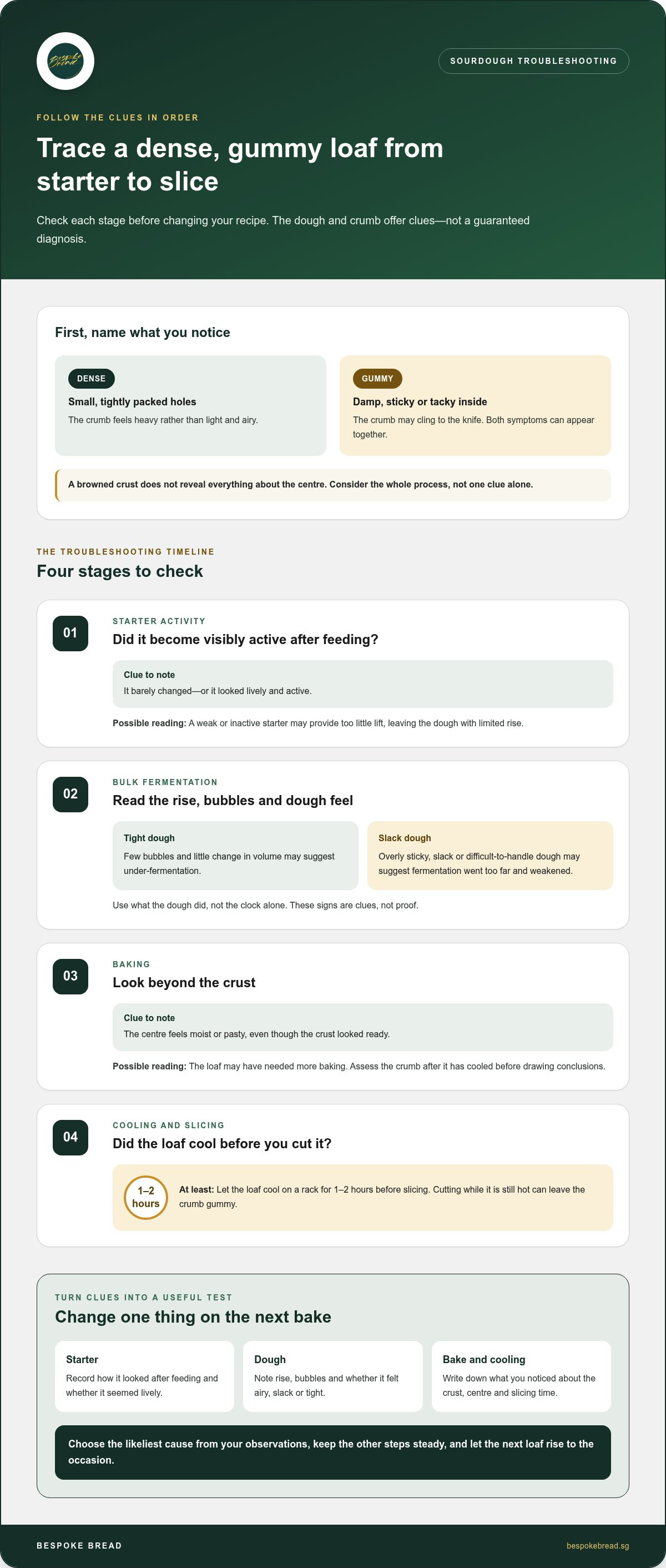
A gummy loaf is frustrating, but it can still earn its keep as a batch of useful clues. Resist the urge to overhaul your recipe, fermentation time and baking method all at once. If you’re still asking why is my sourdough dense and gummy, choose the likeliest cause from your observations and test one adjustment on the next bake.
You don’t need special equipment. A notebook or phone note is enough to build a simple bake log. Jot down:
Connect your next experiment to the strongest clue. If the dough barely rose, focus on starter activity or fermentation cues, not a new flour and shaping method. If it looked well risen but the cooled centre was still damp, review the bake before changing how you ferment. Keep the other steps steady so you can see what that single adjustment did.
Structured practice can make those clues easier to interpret. Bespoke Bread’s beginner-focused Sourdough Baking Class - Fundamentals includes expert instruction and troubleshooting tips for home bakers who want guided practice. Keep notes, change one thing, and let the next loaf add another useful crumb to your case file.
Your next bake doesn’t need a dramatic recipe makeover. Treat it as a small experiment: make one thoughtful adjustment, keep the rest familiar, and give yourself room to learn. That’s how the question “why is my sourdough dense and gummy” can become a useful prompt instead of a baking-day headache.
If you’d like guidance as you build confidence, explore the Sourdough Baking Class - Fundamentals. Its hands-on instruction, troubleshooting tips and lifetime support for home bakers offer a welcoming way to practise and keep learning. You don’t need a perfect loaf to make progress. Each bake gives you another chance to get curious, trust your observations and enjoy the craft. Book a class and take your next sourdough question from puzzling to proofing. That’s a pretty good way to rise to the occasion.
If the crumb is simply tacky, it’s usually a texture problem, but a wet, dough-like centre may not be fully baked. Avoid eating portions that seem raw, and consider baking the loaf further if it’s just come out of the oven. If you notice mould or an unusual smell, discard it rather than trying to rescue it.
Yes, if you’ve just cut into the loaf and found a clearly underbaked centre, you can return the remaining loaf to the oven to finish baking. If it’s already fully cooled and sliced, toasting individual slices is often more practical than reheating the whole loaf. The crumb may not return to its original texture, but toast can still be tasty.
The centre is the last part of a loaf to heat through, so a crust that looks done doesn’t always mean the middle is ready. If you’re asking why is my sourdough dense and gummy only at its heart, consider whether it needed more baking or was cut before the interior had settled. A thick, moist centre points to a different clue than a uniformly tacky crumb.
0 comments